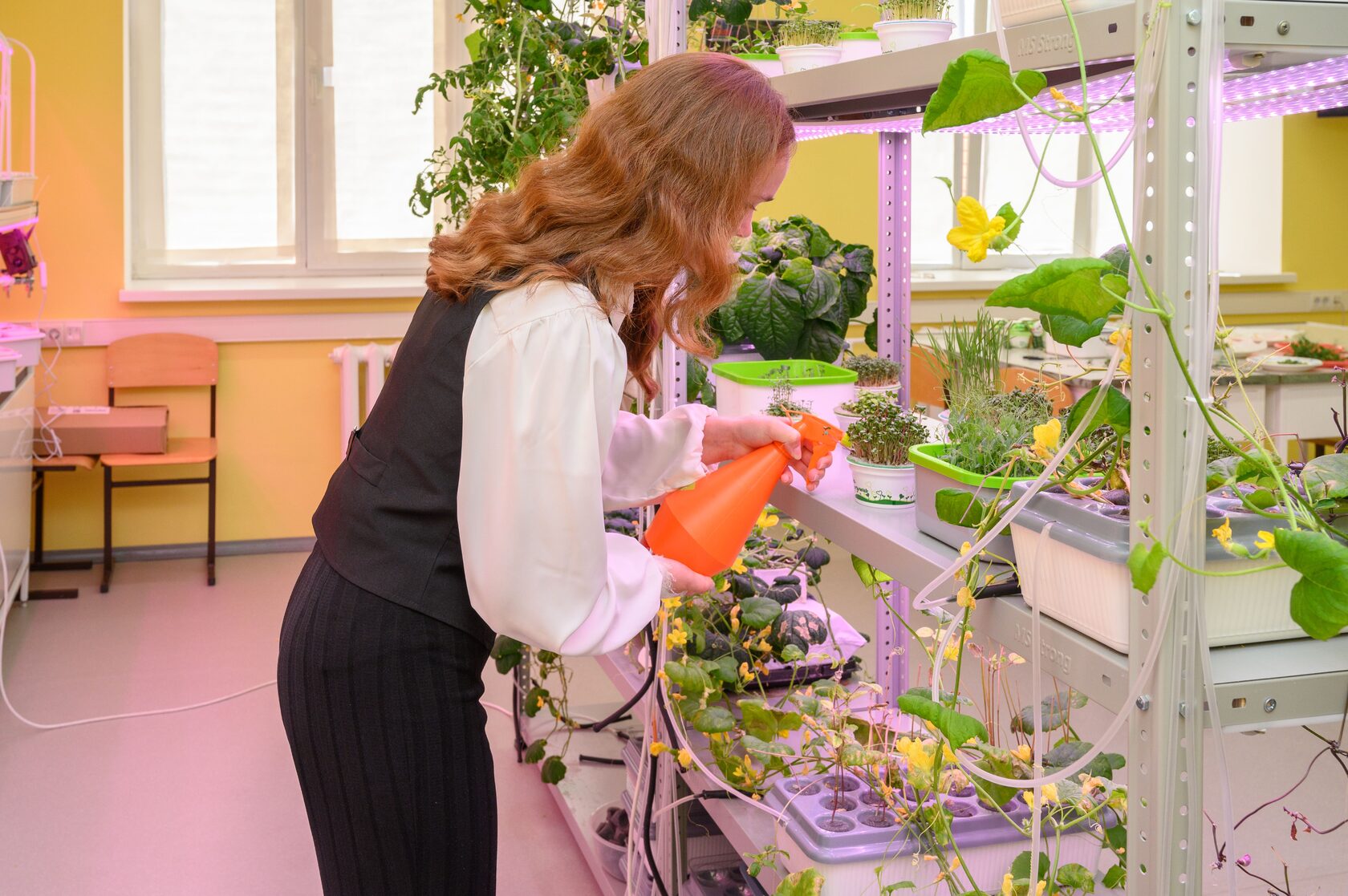
Hands-on growing in greenhouses on school grounds is spreading across Russia again. Teaching students to grow food, including for school cafeterias, is increasingly being discussed.
Zhokhsogon School in the Sakha Republic developed its agricultural school to the point where it now receives municipal orders. A school in Irkutsk Oblast uses vegetables grown by its students. This reduces purchasing costs, but the greatest benefit is students’ involvement: it connects with the curriculum, teaches work skills and introduces alternative growing methods and careers.
Zhokhsogon School in the Sakha Republic developed its agricultural school to the point where it now receives municipal orders. A school in Irkutsk Oblast uses vegetables grown by its students. This reduces purchasing costs, but the greatest benefit is students’ involvement: it connects with the curriculum, teaches work skills and introduces alternative growing methods and careers.

At School No. 4 in Okha, Sakhalin Oblast, children and teachers have been growing greens and vegetables for three years using hydroponics: equipment for growing microgreens and plants in water.
“We can see the results! The children have been doing this for several years and understand the whole process. What was once unfamiliar is now easy. The developmental work is progressing well: children with special educational needs remember their earlier experience and complete the tasks. This is familiar work for them, giving them additional advantages in future independent life,” says school director Elena Syomshchikova.
The UN also discusses the benefits of school growing. Gardening encourages healthy eating, life skills and environmental literacy. Key benefits include:
— City farming and agricultural classrooms encourage balanced diets and physical activity.
— Students learn more effectively about plants, how they grow and why they matter.
— School growing connects children with nature and teaches environmental care and respect.
— Different textures, smells, sounds and colours support sensory development.
— Teamwork develops social and communication skills, while growing plants builds confidence.
Our CITY FARMER programme has received federal recognition. We work across Russia.